Skip to content

Key points

  • The symptoms of early HIV infection are the same in men and women.
  • A flu-like illness may appear within a month of infection.
  • The most common symptoms are fever, swollen glands, muscle aches and tiredness.
  • This is sometimes called a seroconversion illness.

Once you have been infected with HIV, the virus takes hold in your body and multiplies quickly. Your immune system responds by producing antibodies (proteins made by your immune system) in response to the virus. This period is known as seroconversion.

The antibodies will be in your blood within one to two weeks and will continue to increase in the months after infection.

Glossary

cure

To eliminate a disease or a condition in an individual, or to fully restore health. A cure for HIV infection is one of the ultimate long-term goals of research today. It refers to a strategy or strategies that would eliminate HIV from a person’s body, or permanently control the virus and render it unable to cause disease. A ‘sterilising’ cure would completely eliminate the virus. A ‘functional’ cure would suppress HIV viral load, keeping it below the level of detection without the use of ART. The virus would not be eliminated from the body but would be effectively controlled and prevented from causing any illness. 

HIV

Human immunodeficiency virus, the virus which causes AIDS. There are two variants: HIV-1, and HIV-2. HIV-1 is by far the most common worldwide. See ‘subtype’ for more information.

on

Abbreviation of a Latin term meaning every night.

seroconversion

The transition period from infection with HIV to the detectable presence of HIV antibodies in the blood. When seroconversion occurs (usually within a few weeks of infection), the result of an HIV antibody test changes from HIV negative to HIV positive. Seroconversion may be accompanied with flu-like symptoms.


vaccine

A substance that contains antigenic components from an infectious organism. By stimulating an immune response (but not disease), it protects against subsequent infection by that organism, or may direct an immune response against an established infection or cancer.


Seroconversion often, but not always, causes a flu-like illness. It’s thought that more than six in every ten people with HIV experience one or more of these symptoms shortly after infection.

These symptoms typically appear within a month of infection and go away within two to three weeks.

Symptoms may include:

  • fever
  • swollen glands
  • muscle aches
  • tiredness
  • body rash (usually reddish, small flat blemishes that are not itchy)
  • oral thrush
  • weight loss
  • joint pains
  • sore throat
  • gastrointestinal symptoms, such as vomiting (being sick) and diarrhoea
  • headache
  • genital sores or thrush
  • night sweats
  • problems affecting the brain, nerve, or spine, such as meningitis or encephalitis.

The most commonly experienced symptoms are fever, swollen glands, muscle aches and tiredness.

These symptoms are not a good way to identify seroconversion, to diagnose HIV, or to rule it out. There are lots of other illnesses that can cause these symptoms. Many people do not notice any symptoms after infection.

An HIV test needs to be done in order to confirm HIV infection. This is the only reliable way of knowing whether you have HIV or not.

Abbey Stanford

Abbey Stanford

Editorial Consultant

Abbey is a freelance Health Editor who works on aidsmap's About HIV pages. She previously worked full time at aidsmap as an HIV Information Editor. She has also worked as a Specialist Health Editor for Bupa, creating and reviewing patient information, and at Flo Health, writing about menstrual health.

Basic information

Very recent infection

Very recent infection

How do I know if I have HIV?

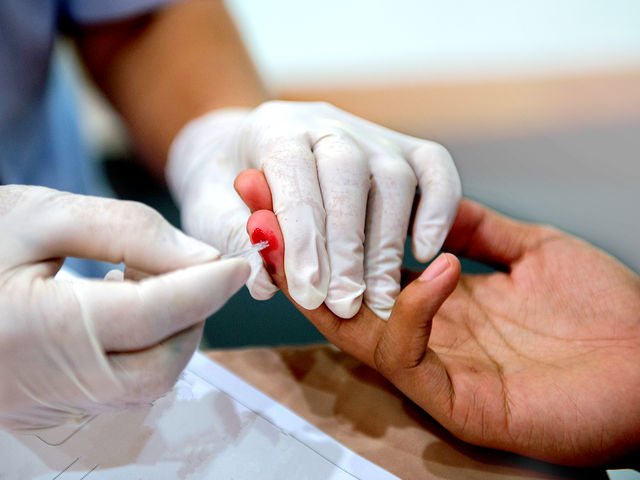
A person wearing a surgical glove holds the hand of somebody else. This person is having their finger pricked with a fine needle. The needle has drawn a small amount of blood which is visible. The image has a pink and purple filter over it.

What are the symptoms of HIV?

Domizia Salusest | www.domiziasalusest.com

The stages of HIV infection

An illustration of an HIV virus.

Early HIV infection

A woman site on the sofa with a blanket over her and around her shoulders.

What are the symptoms of HIV?

Domizia Salusest | www.domiziasalusest.com

Diagnosed with HIV at a low CD4 count

A vial of blood is resting on a form that indicates it will be tested for CD4 cells. The image has a pink and purple filter over it.

What is the window period for HIV testing?

A person wearing a surgical glove holds the hand of somebody else. This person is having their finger pricked with a fine needle. The needle has drawn a small amount of blood which is visible. The image has a pink and purple filter over it.

Immune reconstitution inflammatory syndrome (IRIS)

Man in a hospital bed.